What Is a Certified Document Translation?
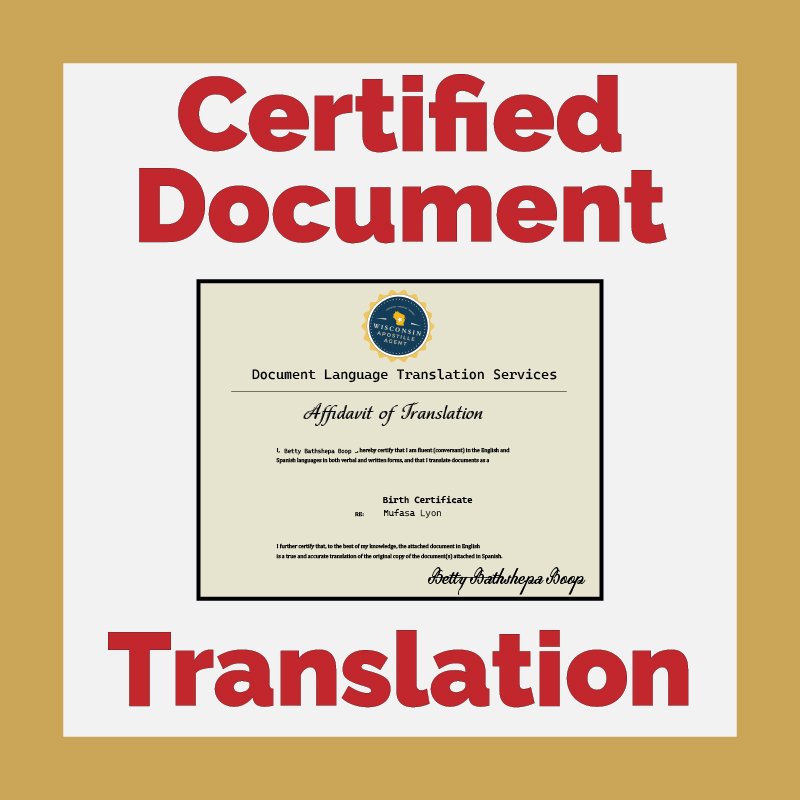
A certified document translation is completed by a qualified translator and accompanied by a signed certificate of accuracy. This certification statement confirms that the translation is a complete and accurate representation of the original document. In the United States, certified translations are widely accepted by government agencies, courts, and educational institutions.
Certified translations are most commonly required for:
- USCIS and immigration filings
- Birth, marriage, and death certificates
- Academic transcripts and diplomas
- Legal documents used within the U.S.
- Employment and licensing applications
It’s important to note that in the U.S., a translator does not need to be government-appointed to produce a certified translation. However, the certification must include specific language and be properly signed to meet agency requirements. If the certification statement is missing or improperly formatted, the document may be rejected—even if the translation itself is accurate.
Certified translations are often paired with notarization and apostilles when documents are being sent abroad. However, certification alone may not always be enough, depending on the destination country.
What Is a Sworn Document Translation?
A sworn document translation is completed by a translator who has been officially authorized by a foreign government or court. These translators take a legal oath and are permitted to issue translations that carry legal validity in that specific country. Sworn translations typically include an official stamp, signature, and registration number tied to the translator’s government authorization.
Sworn translations are commonly required for:
- Foreign courts
- Civil registries
- Immigration offices outside the U.S.
- Marriage, residency, or citizenship applications abroad
- Government agencies in civil law countries
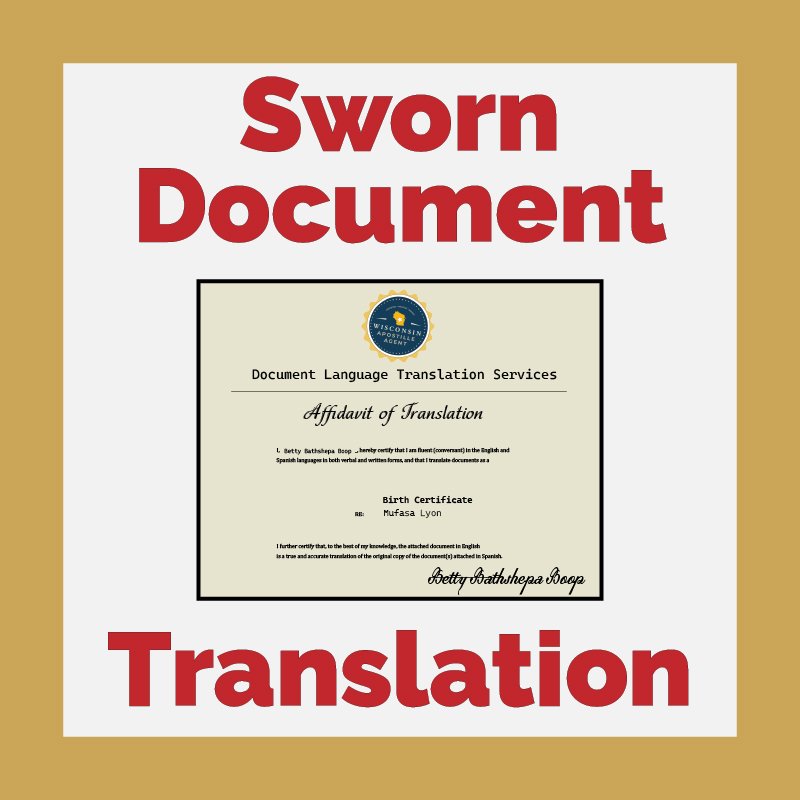
Countries that follow civil law systems, such as Spain, France, Italy, Germany, and many Latin American countries, frequently require sworn document translations for official use. If a sworn document translation is required and a certified document translation is submitted instead, the documents are often rejected without review.
The Key Difference: Authorization and Destination
The primary difference between certified document translation and sworn document translation hinges on who authorizes the translator and where the document will be used.
- Certified document translations are most often accepted within the United States
- Sworn document translations are typically required by foreign governments
This distinction becomes especially important when documents are being authenticated through the apostille process. An apostille authenticates the signature on a document so it can be recognized internationally—but it does not override translation requirements. Even if your document is properly notarized and apostilled in Wisconsin or elsewhere in the U.S., the receiving country’s rules always take priority.
In many cases, clients assume that because their document originated in the U.S., a certified translation will be sufficient. Unfortunately, this assumption can result in delays once the document reaches the foreign authority.
Why This Matters for Apostille Services
When preparing documents for international use, everything must work together:
notarization, translation, apostille, and destination-country requirements. Missing just one piece can cause the entire process to stall.
This is why working with an experienced apostille professional makes such a difference. Instead of guessing which translation type is required, you can get guidance based on:
- The destination country
- The type of document
- The receiving authority
- Whether additional authentication is needed
Conculsion
When it comes to preparing documents for international use, the details matter. Understanding the difference between certified and sworn document translations can be the deciding factor between a smooth approval and costly delays. Every country has its own requirements, and even a properly notarized and apostilled document can be rejected if the wrong type of translation is used. Taking the time to confirm what the receiving authority expects helps protect your timeline and your investment.
Statewide Apostille Notarization Services
Special Power of Attorney for the Philippines: Is an Apostille Required?
How to Apostille Wisconsin Documents While Abroad — 4 Easy Steps To Avoid Rejection
How to Get Your UW–Madison Diploma & Transcript Apostilled (When You Don’t Have Copies)
Sworn vs. Certified Document Translation: What’s The Difference?
How to Get an Apostille Online in Wisconsin (Step-by-Step 2025 Guide)
What Is an Apostille and Why You Might Need One An apostille certifies a Wisconsin…